Magnetic smart material stitched into clothing is the future
Smarthomes and all their gadgets are lovely but without easier ways to control said gadgets, what’s the point? Enter smart clothing that can do things like unlock doors.
The big brains over at the University of Washington has come up with a new use for conductive thread. It turns out the material isn’t just conductive but can also be magnetised meaning it can store data, just like a hard drive. The conductive fabric can have codes stored in it to unlock doors or even, potentially, make payments.
Since the fabric is weaved into the clothes it is also built to last. You will be able to wash and dry the smart clothes the same as you would any other clothing (up to 320 degrees fahrenheit), all without losing the magnetic data stored in them.
While door codes stitched into a sleeve to easily unlock doors is a cool idea the researchers did more. They also weaved the conductive thread into a glove and found that it was recognised by a smartphone. This made it possible to interact with the phone while locked away in a pocket or bag - a great way to skip tracks while listening to music without unlocking the phone, for example.
The next step is to create new textiles with even stronger magnetic fields so they can store even more data. Who knows, flash drives could soon be a thing of the past, replaced by smart clothing.
Apple has unveiled a new edge-to-edge display iPhone which will go on sale as the most expensive handset the tech giant has ever made.
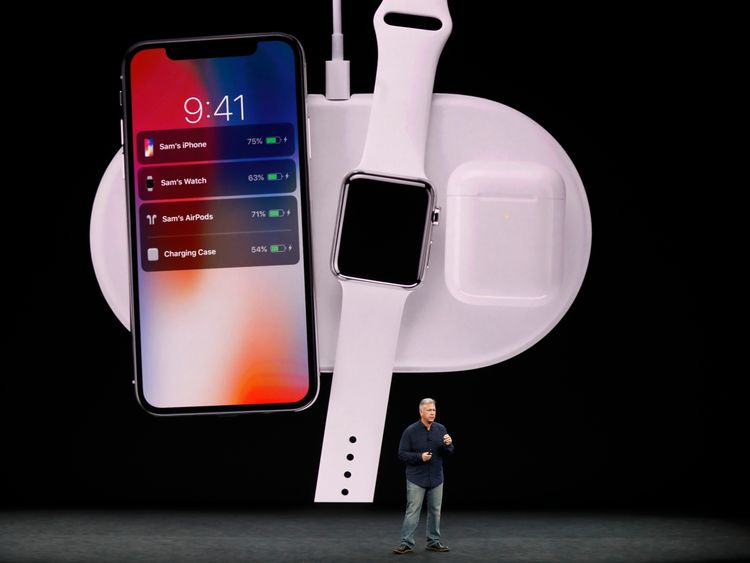
The iPhone X, pronounced 10, features wireless charging, an infrared camera and improved battery life, and will cost £999 when it is made available on 3 November.
Unlike previous models it has no physical home button, and will include facial recognition software which replaces the fingerprint sensor used to unlock the phone.
The Face ID technology can also be used to create Animoji - animated emoji controlled by the user's face.
Image:The model also features wireless charging, an infrared camera and improved battery life
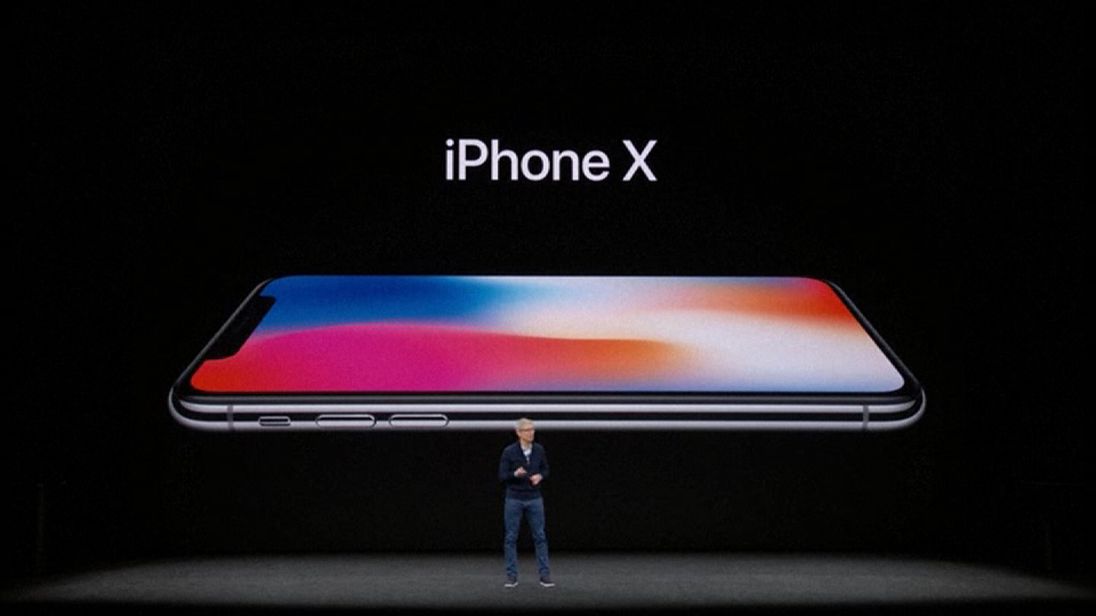
Announcing the iPhone X at the company's new Steve Jobs Theatre in California, Apple chief executive Tim Cook described the model as "the biggest leap forward since the original iPhone".
However, the launch did not go fully to plan as Apple vice president Craig Federighi initially failed to unlock the device using Face ID.
As well as the iPhone X, Apple also announced the new iPhone 8 and iPhone Plus 8, which will cost £699 and £799 respectively.
Both will feature wireless charging capabilities, while the 8 Plus will include new camera technology called portrait lighting.
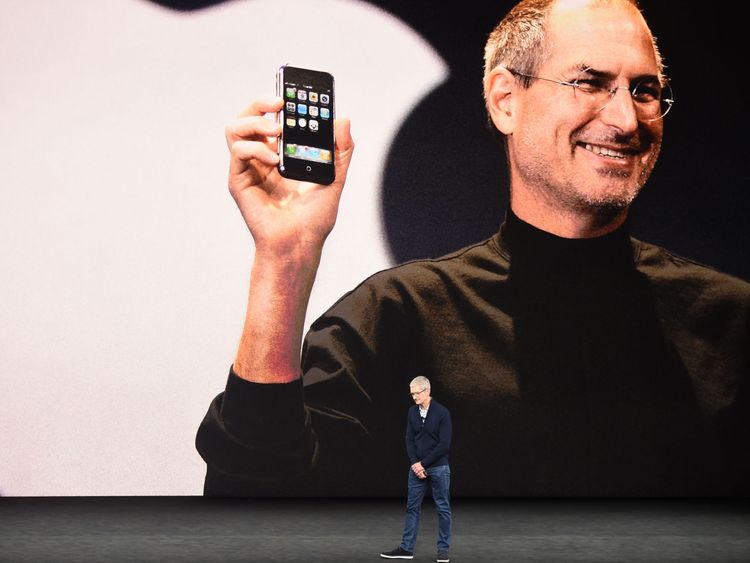
Image:The launch included a tribute to late Apple chief executive Steve Jobs
The software uses artificial intelligence to automatically improve the lighting effects of portrait photographs.
Both models are dust and water resistant, and feature 12-megapixel rear cameras.
Away from smartphones, Apple also announced the Apple Watch Series 3, which includes its own mobile signal.
The new feature will enable users to make calls, send messages and stream music without being connected to a smartphone.
The new Apple Watch Series 3 includes its own mobile signal
Image:
The new Apple Watch Series 3 includes its own mobile signal
An enhanced version of the Apple TV which supports 4K resolution and high dynamic range (HDR) was also revealed.
The Watch and TV will go on sale on 22 September, alongside the iPhone 8 and 8 Plus.
Tech analysts were split on the appeal of Apple's new iPhone X model.
Jan Dawson of Jackdaw Research described it as "a far bigger upgrade" than previous devices, adding it would become "the object of desire for many users".
However, Ernest Doku, from uSwitch.com, said Apple "still faces a challenge in convincing both the uninitiated and long-term fans alike that these new devices are the true innovation the market has long needed".
We also know that it is going to be Apple's most expensive handset ever, setting consumers back £999 when it hits the shelves on Friday.
But what we didn't know was how well its edge-to-edge screen would work, if its Face ID unlocking system would be accurate, and whether it could possibly be worth that much money.
Many reviewers have complained about the limited time they had with the phone due to delayed deliveries - and all criticised the continued lack of a headphone jack, which was discontinued after the iPhone 6.
Apps which aren't designed for the iPhone X leave the edge-to-edge screen looking odd, with the iOS autolayout feature meaning icons are blocked or obscured.
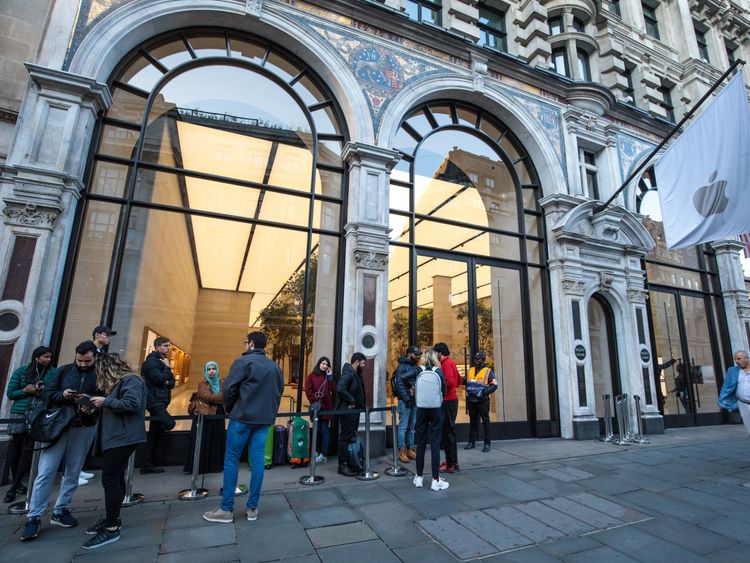
Image:The queue outside Apple Regent Street for the iPhone 8 launch
A particular issue for US technology news network The Verge is the sensor housing at the top of the screen, which breaks the typical layout for iPhones of a perfect rectangular display.
It would fall to the app developers to handle this display oddity, but when the apps worked the results were complimented by all reviewers.
The iPhone X is Apple's first phone to use an OLED (organic light-emitting diode)display rather than LCD and uses the technology to keep the screen's colours sharp.
The edge-to-edge front means the iPhone X was set up to be billed as the most attractive smartphone ever made, but it fell short for The Verge, whose reviewer gave that title to the iPhone 4.
The Telegraph went so far as to say the design took a backseat, despite the full screen being billed as an achievement for Apple's chief design officer Sir Jony Ive.
Video:iPhone X launch not entirely smooth!
Face ID worked for all of the reviewers, despite a wobble during the launch event which risked embarrassing the company.
The biggest issue with Face ID, which uses infrared light to map users' faces and unlock the phone, was the difficulty of using it in bright environments.
It was "a little inconsistent" in bright sunlight and in the presence of fluorescent light, reported The Verge, although Forbes claimed to find it worked well in bright light.
For all this, Apple will be hoping the iPhone X launch on Friday will be less muted than that of the iPhone 8, for which a paltry 13 customers queued outside of its Regent Street store.
Those rumoured supply demands will almost certainly play in Apple's favour come Friday morning when customers who have not pre-ordered a device will be queuing to pick one up in person.
Want a workplace toy for your office desk that is unlike any other? Look no further than Nanodots. It’s yours for just $34.99.
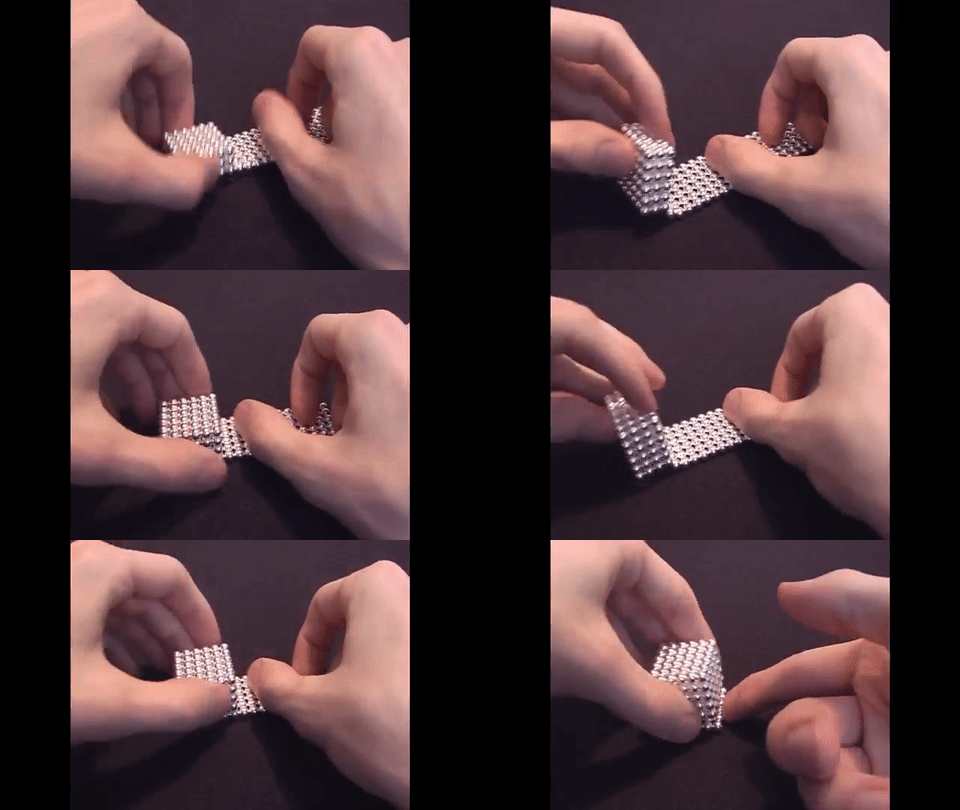
Nanodots are magnetic spheres precision-milled from sintered neodymium-iron-boron. They’re designed to model atomic interactions on a human scale, which is what makes them such fascinating scientific toys.such fascinating scientific toys. Nanodots are made out of the strongest permanent magnets and can lift 1000 times their own weight. You’ll be endlessly amazed by the incredible nature of this unique toy.