Thursday, November 2, 2017

These smart clothes can unlock your front door

Magnetic smart material stitched into clothing is the future

Smarthomes and all their gadgets are lovely but without easier ways to control said gadgets, what’s the point? Enter smart clothing that can do things like unlock doors.
The big brains over at the University of Washington has come up with a new use for conductive thread. It turns out the material isn’t just conductive but can also be magnetised meaning it can store data, just like a hard drive. The conductive fabric can have codes stored in it to unlock doors or even, potentially, make payments.
Since the fabric is weaved into the clothes it is also built to last. You will be able to wash and dry the smart clothes the same as you would any other clothing (up to 320 degrees fahrenheit), all without losing the magnetic data stored in them.
While door codes stitched into a sleeve to easily unlock doors is a cool idea the researchers did more. They also weaved the conductive thread into a glove and found that it was recognised by a smartphone. This made it possible to interact with the phone while locked away in a pocket or bag - a great way to skip tracks while listening to music without unlocking the phone, for example.
The next step is to create new textiles with even stronger magnetic fields so they can store even more data. Who knows, flash drives could soon be a thing of the past, replaced by smart clothing.

SpaceX could end the year with the mother of all fireworks

SpaceX

WHY IT MATTERS TO YOU
SpaceX has been making steady progress with its reusable rocket system and a successful launch of the Falcon Heavy would mark another notable step forward.
SpaceX has been launching and landing its Falcon 9 rocket on such a regular basis recently that the missions hardly make the news these days, a testament to the impressive progress made by Elon Musk’s private space company in recent years.
So now attention is turning to the Falcon Heavy, which Musk says will be “the most powerful operational rocket in the world by a factor of two.” Sporting not one, or two, but three boosters with nine engines each, the Falcon Heavy will have twice the thrust of the next largest rocket at lift-off — equal to about eighteen 747 aircraft — and space enthusiasts are eagerly awaiting its maiden mission. But no one is quite sure when it’ll be.
NASASpaceflight this week confidently claims SpaceX is planning to launch the Falcon Heavy for the first time “in the late-December time period.” Specifically, it says Musk’s company wants to perform a static test-fire of the boosters in the middle of next month, followed by a launch on December 29.
The report takes into account the length of time it’ll take to convert Kennedy Space Center’s Launch Complex 39A for the Falcon Heavy, with one rocket launch remaining before the work can begin. In September, Musk said during a presentation in Australia that he hoped the Heavy would launch “toward the end of the year.”
Musk, a man who comes up withideas of huge ambition like most of us come up with ideas for breakfast, recently teased space fans with an animation showing how the Falcon Heavy launch might look. It shows the extraordinarily powerful rocket leaving the launchpad before the start of various separation steps, and ends with its booster cores landing back on Earth, a maneuver once considered as wildly ambitious but now pretty much perfected by SpaceX. But mindful of the issues experienced with the Falcon 9 over the years, Musk noted that a lot “can go wrong” with the Heavy in its early, complex missions.

A post shared by Elon Musk (@elonmusk) on 
SpaceX’s rocket system, which has been in development since the company’s founding in 2002, is designed to enable the reuse of rockets as part of a plan to dramatically cut the cost of space travel and pave the way for manned missions into deep space.
Fingers crossed SpaceX can get the Heavy off the ground in December — it’d certainly be a spectacular way to end what has been a successful year for the company.

iPhone X: Apple unveils new £999 edge-to-edge display handset

iPhone X

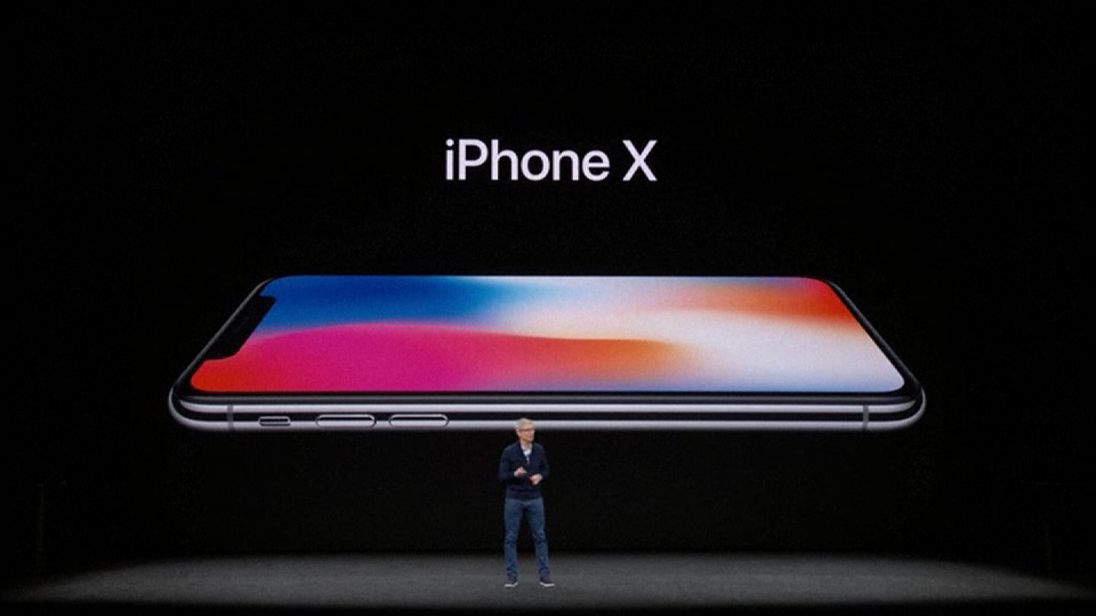
Apple has unveiled a new edge-to-edge display iPhone which will go on sale as the most expensive handset the tech giant has ever made.
The iPhone X, pronounced 10, features wireless charging, an infrared camera and improved battery life, and will cost £999 when it is made available on 3 November.
Unlike previous models it has no physical home button, and will include facial recognition software which replaces the fingerprint sensor used to unlock the phone.
The Face ID technology can also be used to create Animoji - animated emoji controlled by the user's face.
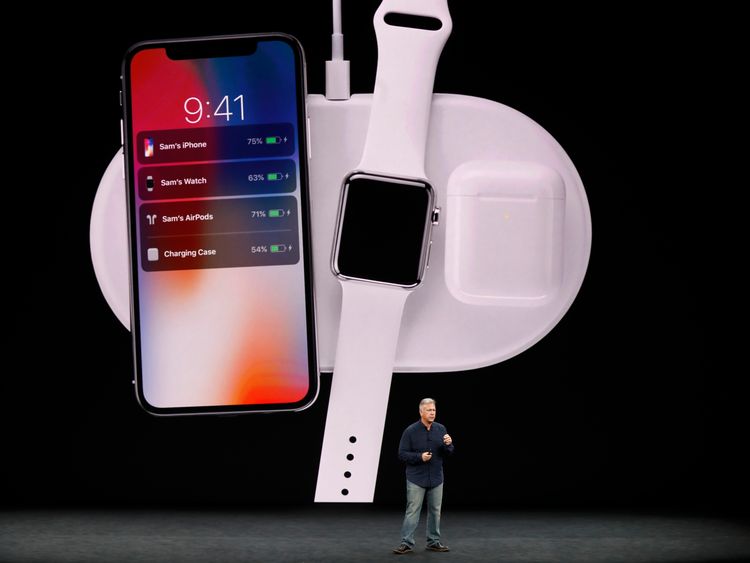
Apple Senior Vice President Phil Schiller shows the iPhone X during a launch event
Image:The model also features wireless charging, an infrared camera and improved battery life
Announcing the iPhone X at the company's new Steve Jobs Theatre in California, Apple chief executive Tim Cook described the model as "the biggest leap forward since the original iPhone".
However, the launch did not go fully to plan as Apple vice president Craig Federighi initially failed to unlock the device using Face ID.
As well as the iPhone X, Apple also announced the new iPhone 8 and iPhone Plus 8, which will cost £699 and £799 respectively.
Both will feature wireless charging capabilities, while the 8 Plus will include new camera technology called portrait lighting.
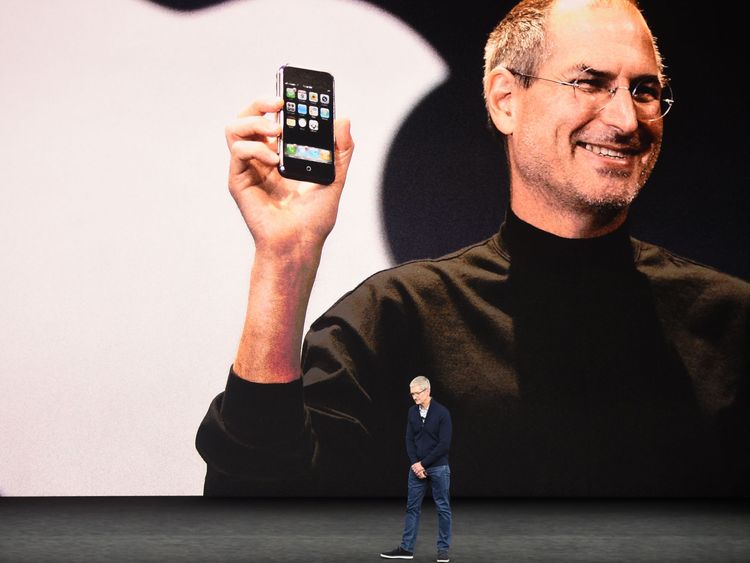
The launch included a tribute to late Apple CEO Steve Jobs
Image:The launch included a tribute to late Apple chief executive Steve Jobs
The software uses artificial intelligence to automatically improve the lighting effects of portrait photographs.
Both models are dust and water resistant, and feature 12-megapixel rear cameras.

Away from smartphones, Apple also announced the Apple Watch Series 3, which includes its own mobile signal.

The new feature will enable users to make calls, send messages and stream music without being connected to a smartphone.

The new Apple Watch Series 3 includes its own mobile signal
Image:
The new Apple Watch Series 3 includes its own mobile signal
An enhanced version of the Apple TV which supports 4K resolution and high dynamic range (HDR) was also revealed.

The Watch and TV will go on sale on 22 September, alongside the iPhone 8 and 8 Plus.

Tech analysts were split on the appeal of Apple's new iPhone X model.

Jan Dawson of Jackdaw Research described it as "a far bigger upgrade" than previous devices, adding it would become "the object of desire for many users".

However, Ernest Doku, from uSwitch.com, said Apple "still faces a challenge in convincing both the uninitiated and long-term fans alike that these new devices are the true innovation the market has long needed". 

Wednesday, November 1, 2017

Has Apple gone too far for £999 iPhone X to be a success?

iPhone X

Apple's chief executive describes the iPhone X as "the future of smartphones", but reviews are suggesting that this future is not imminent.
We already know that the iPhone X - pronounced 10 - features wireless charging, an infrared camera and improved battery life.
We also know that it is going to be Apple's most expensive handset ever, setting consumers back £999 when it hits the shelves on Friday.
But what we didn't know was how well its edge-to-edge screen would work, if its Face ID unlocking system would be accurate, and whether it could possibly be worth that much money.
Many reviewers have complained about the limited time they had with the phone due to delayed deliveries - and all criticised the continued lack of a headphone jack, which was discontinued after the iPhone 6.
Apps which aren't designed for the iPhone X leave the edge-to-edge screen looking odd, with the iOS autolayout feature meaning icons are blocked or obscured.
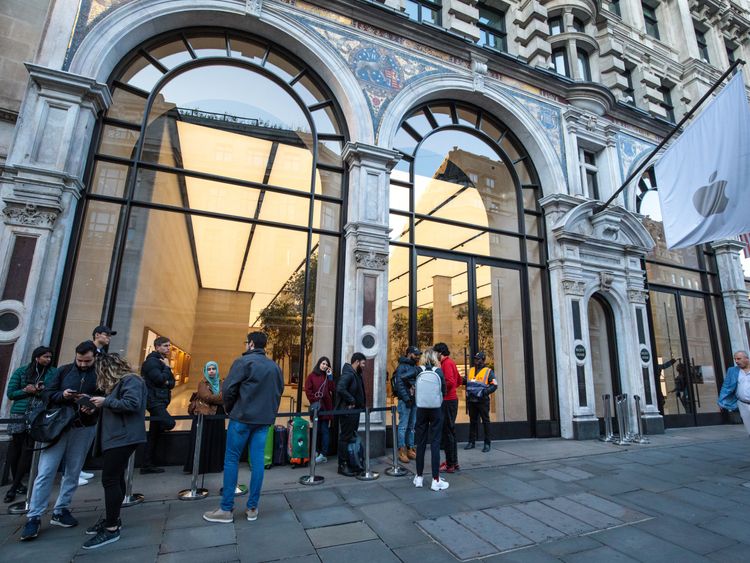
Customers queue outside Apple Regent Street ahead of the launch of the iPhone 8

Image:The queue outside Apple Regent Street for the iPhone 8 launch
A particular issue for US technology news network The Verge is the sensor housing at the top of the screen, which breaks the typical layout for iPhones of a perfect rectangular display.
It would fall to the app developers to handle this display oddity, but when the apps worked the results were complimented by all reviewers.
The iPhone X is Apple's first phone to use an OLED (organic light-emitting diode)display rather than LCD and uses the technology to keep the screen's colours sharp.
The edge-to-edge front means the iPhone X was set up to be billed as the most attractive smartphone ever made, but it fell short for The Verge, whose reviewer gave that title to the iPhone 4.
The Telegraph went so far as to say the design took a backseat, despite the full screen being billed as an achievement for Apple's chief design officer Sir Jony Ive.
Apple unveils the iPhone X
Video:iPhone X launch not entirely smooth!
Face ID worked for all of the reviewers, despite a wobble during the launch event which risked embarrassing the company.
The biggest issue with Face ID, which uses infrared light to map users' faces and unlock the phone, was the difficulty of using it in bright environments.
It was "a little inconsistent" in bright sunlight and in the presence of fluorescent light, reported The Verge, although Forbes claimed to find it worked well in bright light.
For all this, Apple will be hoping the iPhone X launch on Friday will be less muted than that of the iPhone 8, for which a paltry 13 customers queued outside of its Regent Street store.
Those rumoured supply demands will almost certainly play in Apple's favour come Friday morning when customers who have not pre-ordered a device will be queuing to pick one up in person.

Slovakia Government Scholarship Programme for International Students, Teachers and Researchers Worldwide

Slovakia Government Scholarship Programme for International Students, Teachers and Researchers Worldwide

National Scholarship Programme

Course(s) Offered: Any field
Course Level: Postgraduate
Provider: Slovak Government
Country to Study in: Slovak Republic

Scholarship Description
The Government of the Slovak Republic approved the establishment of the National Scholarship Programme for the support of mobility of students, PhD students, university teachers, researchers and artists in 2005. 

The National Scholarship Programme of the Slovak Republic supports mobility of international students, PhD students, university teachers, researchers and artists for scholarship stays at higher education institutions and research organisations in Slovakia.

This is a call for applications for academic year 2017/2018 Scholarship Programme, and which is funded by the Ministry of Education, Science, Research and Sport of the Slovak Republic.
Eligibility
Eligible applicants for a scholarship in the framework of the NSP are:

A) students who:
  • are university students at universities outside Slovakia;
  • are students of the second level of higher education (master's students), or are students who at the time of application deadline have already completed at least 2.5 years of their university studies in the same study programme;
  • will be on a study stay in Slovakia during their higher education outside Slovakia and who will be accepted by a public, private or state university in Slovakia for an academic mobility1 to study in Slovakia.
All 3 conditions must be met. This category does not apply to doctoral (PhD) studies (or their equivalent).

B) PhD students whose higher education or scientific training takes place outside Slovakia and who are accepted by a public, private or state university or a research institution in Slovakia eligible to carry out a doctoral study programme2 (e.g. the Slovak Academy of Sciences) for an academic mobility1 to study/conduct research in Slovakia.

C) international university teachers, researchers and artists who are invited to a teaching/research/artistic stay in Slovakia by an institution with a valid certificate of eligibility to carry out research and development, which is not a business company3 and it has its headquarters in Slovakia.

BEAR IN MIND:
The National Scholarship Programme does NOT support:
  • international students and PhD students accepted for full higher education (1st or 2nd level, i.e. bachelor or master studies) or full doctoral (PhD) studies in Slovakia, or those already studying in Slovakia (full higher education) who would like to fund their studies in Slovakia by the NSP;
  • international applicants who within the period of 36 months prior to the application deadline have spent in the territory of the Slovak Republic 12 or more months (in total);
  • international applicants awarded a scholarship in Slovakia in the framework of other scholarship programmes (e.g. International Visegrad Fund, Erasmus+, CEEPUS, bilateral agreements, etc.).
Individuals with permanent residence in the Slovak Republic can not apply for a scholarship in the framework of the National Scholarship Programme for the support of mobility for applicants from abroad.

Eligible groups
Citizens of any country in the world (except the citizens of Slovakia)

Participating Institutions
All approved/accredited higher education institutions and research organisations in Slovakia

Fields of study
All courses offered by the participating institutions

Number of awards
Not specified by provider

Sponsorship duration
The duration of a scholarship stay:
  • University students: 1 – 2 semesters (i.e. 4 – 5 or 9 – 10 months) or 1 – 3 trimesters, in case the academic year is divided into trimesters (i.e. 3 – 4 or 6 – 7 or 9 – 10 months).
  • PhD students / university teachers / researchers or artists - 1 to 10 months;
Scholarship benefits
The scholarship is intended to cover international scholarship holders’ living costs, i.e. the costs related to staying in Slovakia (food, accommodation, etc.) during their study, research/artistic or teaching stay at universities and in research organisations in Slovakia. The scholarship holder can ask for assistance concerning accommodation and formalities related to entering and staying in the territory of the Slovak Republic either from his/her host institution, or he/she can handle all the necessities him-/herself.

The National Scholarship Programme does not cover any travel costs to and from Slovakia.

Method of Application
Scholarship application forms are submitted on-line on the official website (link to it is below). In order to submit the on-line application, it is necessary to fill out the on-line application form (in Slovak, English, French, Spanish or Russian version), attach all required documents in requested formats and press the "submit" button. The online application must be submitted before the application deadline. It is also necessary to deliver original of the admission/invitation letter to SAIA, n. o., in Bratislava (SAIA, n. o., Sasinkova 10, 812 20 Bratislava 1). 

It is important to read through the 2017/2018 call for Scholarship Application and the Scholarship Terms and Conditions,  and also visit the official website (link to it is below) for complete information on how to apply for this scholarship.

DEADLINES:
The on-line application system opens at least 6 weeks before the deadline. The application form can be filled out only after the on-line application system has been opened. The annual deadline dates for each year are 30th April at 16:00 CET (for scholarship stays for the next academic year); AND 31st October by 16:00 CET (for scholarship stays of the summer semester of the current academic year)

PLEASE NOTE:
Applicants are recommended not to submit their applications at the last moment. Number of operations executed within the last minutes prior to the application deadline may have an influence on the reaction time of the application system. Please, keep that in mind, in order not to miss the application deadline.

Foreign applicants who need to apply for entrance visa to Slovakia or for temporary residence permit are recommended to take into account the necessary visa/residence processing period when planning the starting date of their scholarship stay. Information about visa conditions is provided by Slovak Embassies.

Application Deadline: 31 October 2017
Open to International students: Yes

More Scholarship Information and Application

Korean Government Fully Funded Undergraduate Scholarships for International Students (170 Available)

Korean Government Fully Funded Undergraduate Scholarships for International Students (170 Available) 


Korean Government Scholarship Program (KGSP)
(Undergraduate Program)


Course(s) Offered: Approved fields
Course Level: Undergraduate (bachelors, Associate degree)
Provider: Korean Government (via NIIED)
Country to Study in: South Korea 

Scholarship Description
The Korean Government through the National Institute for International Education (NIIED) offers the Korean Government Scholarship Program (KGSP) for undergraduate programs (KGSP-U) at approved schools.

The scholarship program supports the future global leaders and promotes the international cooperation in education by inviting talented international students to Korea for an opportunity to conduct advanced studies at higher educational institutions in Korea.

The Government of Korea invites all international students who wish to pursue an undergraduate degree course in Korea to apply for the Korean Government Scholarships (Undergraduate program). Undergraduate applications to study in Korea start September 2017.

Eligibility
Prospective applicant must meet the following qualification criteria: 
  1. Must be a citizen of the country to which scholarships are offered, which also applies to applicant's parents. Note: Both applicant and his/her parents must NOT be a holder of Korean citizenship
  2. Have graduated or be scheduled to graduate from high school as of March 1st of the invitation year
  3. Must possess above 80% (out of 100%) cumulative grade point average (CGPA), or must be within the top 20% (out of 100%) in rank in high school.
There may be preferential selection for applicants who have proficiency in Korean or English

Eligible groups
Citizens of more than 62 countries across the world (please see official website for specific countries)

Participating Institutions
All accredited Korean Universities designated by the NIIED -- you may Search Korean Universities, Or see Certified Schools

Fields of Study
All approved undergraduate degree programs, including Bachelor programs and Associate degree programs. Note: Fields which exceed 4 years(e.g. Medicine, dentistry, architecture) are NOT Applicable.

Number of awards
About 170 undergraduate awards from more than 62 countries 

Sponsorship duration
Scholarship will cover total duration of the academic programs i.e 5 years for Bachelor's Degrees (up to 1 year Korean language course plus 4 years Bachelor's degree course requirements) and 3 years for Associate degrees (up to 1 year Korean language course plus 2 years Associate degree course requirements). 

Scholarship benefits
The undergraduate scholarship covers:
  • Airfare: Round-trip economy class ticket
  • Monthly Allowance: 800,000 KRW per month
  • Settlement (i.e Relocation) Allowance: 200,000 KRW upon arrival
  • Language Training Fee: Full coverage
  • Tuition: All admission fees are waived by the host institution (university). The tuition is covered by NIIED and the university.
  • Medical Insurance: 20,000 KRW per month (limited coverage)
  • Korean Proficiency Grants: 100,000 KRW per month for scholars with TOPIK Level 5 or 6
Method of Application
You cannot apply directly to NIIED. Applicants submit their applications either to the Korean Embassies around the world or to the partnering universities in Korea (i.e. 1st Selection Institutions). You should contact one of the 1st Selection Institutions (90 Overseas Korean Embassies or designated Korean Universities) and submit your application no later than the designated deadline. In this 1st round of selection, these 1st Selection Institutions select and forward successful candidates to NIIED (the 2nd selection Institution). Applications SHOULD be made through these 1st selection organizations. Applications DIRECTLY FROM AN APPLICANT or THROUGH FOREIGN EMBASSIES IN KOREA are NOT accepted. 

See websites of Korean Embassy/Consulate in your own country. The guideline, application form, and university information will be available at the website of GKS (see below), Korean Embassies, and designated domestic universities.

DEADLINES:
The deadline for recommendation of applications by 1st Selection Institutions to NIIED for Undergraduate Program is October - November every year. The deadline for applicants' submission to 1st Selection Institutions is much earlier and will vary per country depending on the deadline set forth by the Korean Embassy (Consulate) in the country of origin or the universities in Korea.

For 2018/2019 session, the Korean Embassies or Consulates, and participating Universities, recommend qualified candidates to NIIED by October - November 2017. Be sure to apply before this period. Applications open September 2017.

PLEASE NOTE:
As for detailed information on application deadlines and submission of required documents, applicants should contact the APPROPRIATE KOREAN EMBASSY or CONSULATE in the country of applicant’s origin (or in the neighboring country), the 1st selection organization.

If the respective 1st Selection Institutions do not submit their candidates’ documents to NIIED on time, they will be excluded from the examination of NIIED Selection Committee, and their quotas will be substituted by the other 1st Institutions’ reserve candidates.

Applicants must obtain admission from a University before entry into Korea. Applicants recommended by a Korean Embassy (Consulate) or overseas Korean adoptees must apply and gain admission into 1 of 3 of the designated universities. Applicants recommended by a university in Korea should enter the same university.

Application Deadline: Oct - Nov 2017
Open to International students: Yes

More Scholarship Application and Information(NIIED site)
More Scholarship Information and Application(StudyInKorea site)

Clark University USA Global Scholars Program for Undergraduate International Students

Clark University USA Global Scholars Program for Undergraduate International Students 

Global Scholars Program (GSP)

Course(s) Offered: Any field
Course Level: Undergraduate
Provider: Clark University
Country to Study in: USA

Scholarship Description 
If you are an international student applying to your first year of undergraduate study at Clark University, you could be eligible for merit scholarships offered by the University.

Clark University offers the special Global Scholars Program (GSP) for incoming undergraduate international students who have demonstrated outstanding leadership in their home communities before attending Clark. 

Global scholars receive guidance and opportunities to build on their leadership skills so they can make a difference at Clark, in the Worcester area, and in the global community. The Global Scholars Program (GSP) builds on Clark University's long-standing commitment to providing a challenging education with a global focus.

Eligibility
To be eligible, you must be a first-year applicant (not a transfer student) who has attended school overseas for at least four years. Clark also will consider international citizens attending school in the United States.

You also should have demonstrated the potential to provide leadership in your community and the world and to commit to making a difference.

Eligible groups
Citizens of ALL countries may apply

Participating Institutions
Clark University; Worcester; Massachusetts (MA); United States

Fields of study
Any undergraduate level course offered at the university

Number of awards
Not specified by the sponsoring institution

Sponsorship duration
Covers the whole duration of applicant's chosen undergraduate study (renewable, subject to maintaining conditions of academic standards)

Scholarship benefits
If admitted to the Global Scholars Program, you will:
  • Receive a scholarship of $15,000 to $25,000 per year (for four years, contingent upon meeting academic standards for renewal).
  • Receive a guaranteed $2,500 taxable stipend for a paid internship or research assistantship taken for academic credit during the summer following your sophomore or junior year.
  • Participate in the Global Scholars Mentor Program, including a semi-annual dinner hosted by the president of Clark University. You will be assigned to a faculty adviser, and receive guidance from staff or alumni leadership mentors.
Applicants with financial need greater than the amount of the Global Scholars award may be eligible for additional need-based financial aid. 

Method of Application
If you are interested in the Global Scholars Program, simply check that option when you fill out the Common Application (available after Aug. 1, 2017). You’ll then receive detailed information — including the topic of the short essay — on how to apply for the scholarship. 

It is important to visit the official website (link to it is below) for complete information on how to apply for this scholarship. 

DEADLINES:
The deadline for submitting the essay is Feb. 1, 2018, for Early Action, Early Decision and Regular Decision candidates. 

PLEASE NOTE:
Clark University is an American private university and liberal arts college in Worcester, Massachusetts. Founded in 1887, it is the oldest educational institution founded as an all-graduate university in the United States. Clark now also educates undergraduates.

Application Deadline: 1 February 2018
Open to International Applicants: Yes

More Scholarship Information and Application